

October 1, 2023
ByMaureen Salamon,
Executive Editor, Harvard Women’s Health Watch
- Reviewed byToni Golen, MD,
Editor in Chief, Harvard Women’s Health Watch; Editorial Advisory Board Member, Harvard Health Publishing; Contributor
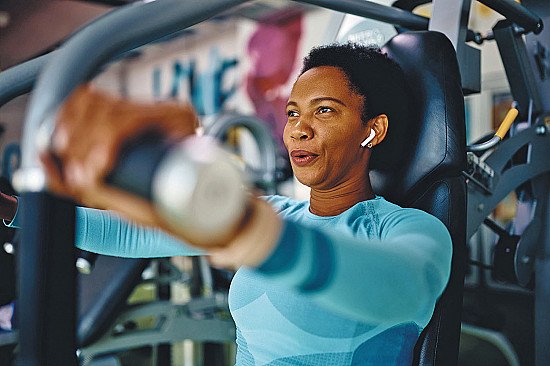
Everybody needs a little time away — from jobs, people, and even <a ve stayed fit and strong from diligent, regular workouts, it's astonishing how quickly it can all slip away if you take weeks or months off, either voluntarily or because of illness or injury.
Beyond losing exercise’s immediate benefits — including sounder sleep and stress relief — the disadvantages of stopping become rapidly apparent. The phenomenon is called deconditioning, and it happens to both recreational exercisers and elite athletes. Certain factors influence how quickly you’ll lose strength and endurance — including age, prior fitness level, and any medical conditions — but it’s universal, says Dr. Beth Frates, a clinical assistant professor in the Department of Physical Medicine and Rehabilitation at Harvard Medical School.
“It will happen no matter who you are,” Dr. Frates says. “We say exercise is medicine, and it’s true. When you take the medicine — or in this case, do the exercise — you reap the benefits. But it’s ‘use it or lose it.'”
Endurance and strength suffer
What does it mean to lose fitness, and how quickly does it erode? That depends on the category.
Cardiovascular fitness is the fastest to decline. Within just a few days of our last aerobic exercise session, our hearts pump less blood around the body, and the blood that’s circulating to cells and muscles contains less oxygen. Only a few weeks later, you’ll find <a d once done with ease. Your heart might be pounding, too.
“Perhaps you’ll notice that you can’t talk while you’re walking up that hill like you did four weeks ago,” Dr. Frates says. “Something that was moderate-intensity exercise for you before is now vigorous, and you might feel like stopping earlier.”
Muscle strength takes longer to lose after you’ve been inactive — about two months. You won’t be able to lift as much or do as many repetitions as before your hiatus. The same weights or body-resistance exercises will prove far more fatiguing, and your muscles will likely feel extremely sore within a day of working out again.
The good news? “Muscle memory” is real, meaning shrunken muscle fibers can indeed rebound, Dr. Frates says. “You can get back to muscle strengthening a little more quickly than you can get back to the same level of cardiovascular conditioning,” she says.
Staging your comeback
The first step in getting fit again is believing you can do it. There’s no question it will get harder before it gets easier, Dr. Frates says.
“No one has a precise equation for how long it will take a particular person to regain fitness,” she says. “The longer you were away from it, the longer it will take. It will not happen immediately — it will take at least several weeks.”
Dr. Frates offers this guidance for safely rebooting your exercise routine:
Get your doctor’s okay. This is crucial if you haven’t exercised in a long time — many months or years — or have chronic conditions such as heart disease or diabetes. And if you experience any alarming symptoms when first <a Don't go off and do sprints at the track on your first day," she says. "Build up slowly. Even taking a walk can help."
Do what worked before. Perhaps you felt on top of your fitness when you took group classes or biked dozens of miles a week. So ease into doing it again. “Think back to when you were routine-consistent and successful and consider using a similar strategy this time around,” Dr. Frates says.
Channel your inner kid. We learned as children that movement can be fun. If you loved hula-hooping or paddle-boarding when you were younger, consider returning to it.
Set up a support system. Accountability partners aren’t a new idea, but they work — which is why getting an exercise buddy should be top of mind when you’re resuming a regimen. If you don’t have a ready workout buddy, consider working with a health coach.
Track your progress. Wearable devices can fuel renewed exercise efforts by tracking step count, resting heart rate, and other metrics. But an old-school pen and paper log can also do the trick. “You can look at how you did and make adjustments,” she says. “If Week 1 doesn’t go the way you wanted, there’s no shame or guilt. This is definitely a case where some exercise is better than none.”
About the Author
Maureen Salamon,
Executive Editor, Harvard Women’s Health Watch
Maureen Salamon is the executive editor of Harvard Women’s Health Watch. She also writes for the Harvard Health Letter, Harvard Heart Letter, and Harvard Men’s Health Watch, as well as for Harvard Health Publishing’s flagship website. …
See Full Bio
View all posts by Maureen Salamon
About the Reviewer
Toni Golen, MD,
Editor in Chief, Harvard Women’s Health Watch; Editorial Advisory Board Member, Harvard Health Publishing; Contributor
Dr. Toni Golen is a physician specializing in obstetrics and gynecology, practicing in Boston. Dr. Golen completed her residency training at George Washington University Medical Center in 1995, and is an associate professor at Harvard Medical …
See Full Bio
View all posts by Toni Golen, MD
Share
Print This Page
Disclaimer:
As a service to our readers, Harvard Health Publishing provides access to our library of archived content. Please note the date of last review or update on all articles.
No content on this site, regardless of date, should ever be used as a substitute for direct medical advice from your doctor or other qualified clinician.
