

The government is expanding food nutrition information policy to cover institutional food service to support increase the use of food nutrition information and address challenges faced by industry.
The forum will discuss ways to expand the use of K-FIND, the national food nutrition data platform and food nutrient database, as well as the direction of policies on nutrition and safety in food and diets. Participants will also share progress in upgrading systems that automatically collect and verify nutrient data using optical character recognition (OCR) and AI.
K-FIND currently contains about 358,000 nutrition records for processed foods, imported foods, health functional foods, prepared foods, and agricultural, livestock and fishery products. Its services let users look up and compare nutrient content by food and check their individual nutrient intake.
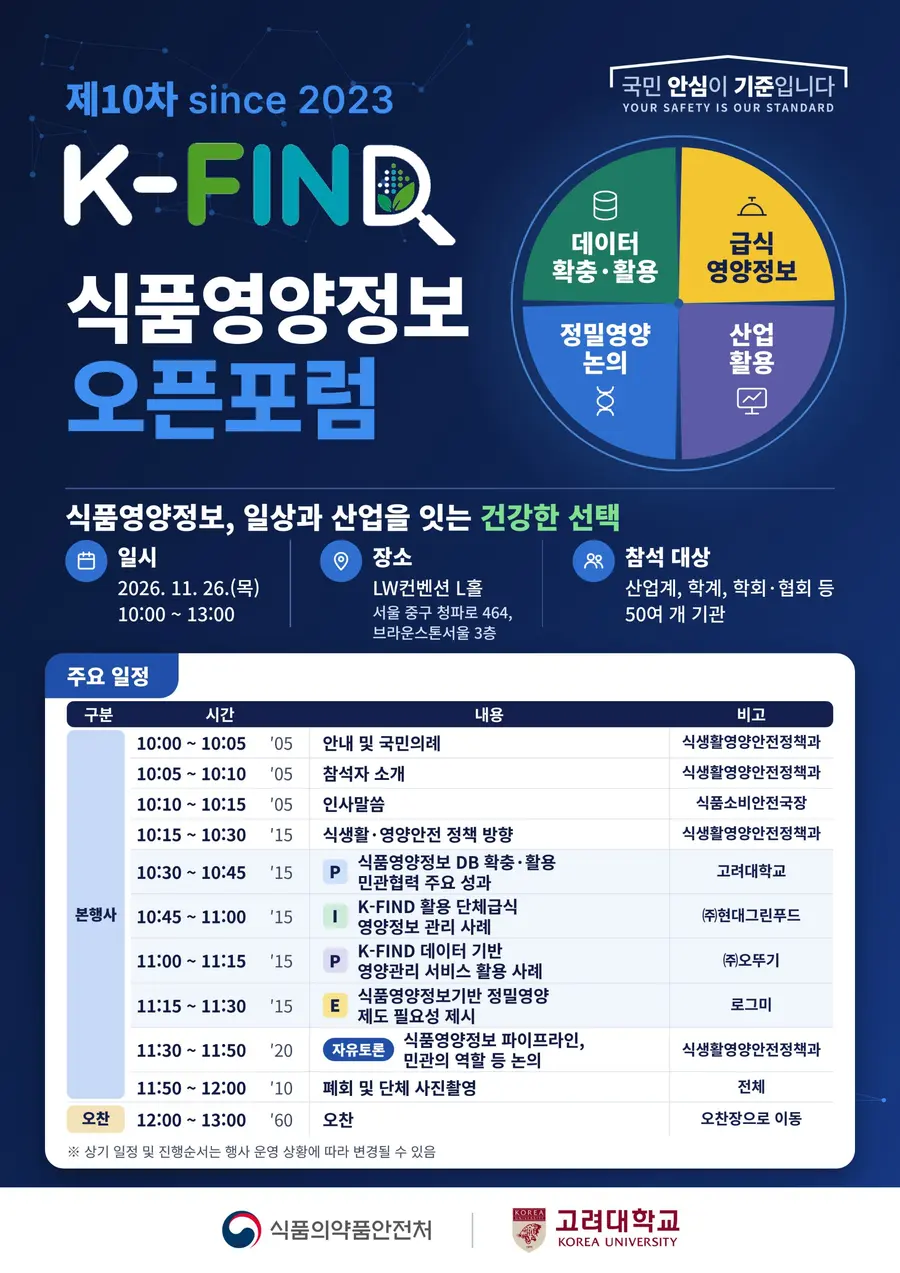
The data is also used by the National Health Insurance Service’s Health Moa, the Ministry of Education’s school meal system and the ministry’s meal management systems for children’s and social welfare facilities, as well as private nutrition and meal management services from Ottogi, Doinglab and Hyundai Green Food, among others.
This year, the ministry will establish an institutional-meals working group under the public-private council and plans to issue voluntary nutrition labeling guidelines by year-end.
According to the Korea Rural <a s 2024 Food Consumption Behavior Survey, about 27% of adults eat lunch through an institutional meal service at least five times a week.
The guidelines will outline steps small and midsize food-service operators can follow, from selecting menu items to calculating nutrient content and posting information. They will also explain which nutrients to label, how to use K-FIND and how to display information on different media, including menus and kiosks.
The ministry presented commendations from the minister of food and drug safety to Ottogi Food Safety Science Institute, Doinglab, Ourhome and Hyundai Green Food for their contributions to expanding food nutrition information and voluntary nutrient labeling for institutional meals.
“Food nutrition information is a key realso for supporting the development of a diverse range of K-Food products,” Commissioner Oh Yu-kyoung said. “We will continue expanding the food nutrition information that the public and industry need and make it easier and more convenient to use.”
#Ministry of Food and Drug Safety#MFDS#Commissioner Oh Yu-kyoung#food nutrition information#food nutrient database#K-FIND#Korea Food Information Database#National Food Nutrition Data Platform#public-private food nutrition information council#open forum#food safety#dietary safety#nutrition science#nutrition labeling#voluntary nutrition labeling#nutrition management#food-service industry#institutional food service#small and midsize food-service operators#institutional-meals working group#school meals#children’s meals#social welfare meals#meal management system#meal planning#menu#kiosk#healthy eating#public health#National Health Insurance Service#Health Moa#Ministry of Education#Korea Rural Economic Institute#Food Consumption Behavior Survey#artificial intelligence#AI#optical character recognition#OCR#big data#automated data collection#data verification#public data#data access#data reliability#processed foods#imported foods#health functional foods#prepared foods#agricultural#livestock and fishery products#food industry#food manufacturing#food tech#K-Food#Ottogi#Ottogi Food Safety Science Institute#Doinglab#Ourhome#Hyundai Green Food#public-private partnership#Minister of Food and Drug Safety Commendation#Ji Yong-hoon
