
CoverWhat was once a matter of instinct, self-care has now become a matter of constant measurement (Photo:
Sleep scores, supplements, routines and retreats: when did looking after ourselves become a second job?
Has self-care become less about feeling better and more about proving that we are trying hard enough? Wellness today can look like an endless performance of discipline: the right sleep score, the right supplements, the right routine and the right retreat to recover from it all. People are even paying for permission to read, rest and disconnect.
This International Self-Care Day, on 24 July, we ask a more uncomfortable question: have we forgotten how to recognise when enough is enough?
The origins of self-care
The World Health Organisation (WHO) defines self-care broadly as the ability of individuals, families and communities to promote and maintain their health, prevent disease and cope with illness, with or without the support of a health or care worker.
In this public-health framing, self-care means active participation in health, not lifestyle perfection. Its scope includes health promotion, disease prevention, caring for dependents, managing illness, rehabilitation and recognising when professional care is needed. WHO also makes clear that self-care should operate within a safe and supportive health system rather than disconnecting people from healthcare.
As wellness developed into a vast consumer industry, self-care also acquired a more commercial meaning. According to the Global Wellness Institute, the global wellness economy doubled in size between 2013 and 2024. As the industry grew, so did the number of areas in which consumers were invited to intervene: sleep, stress, food, fitness, appearance, ageing, recovery and mental wellbeing.
How consumer self-care became work
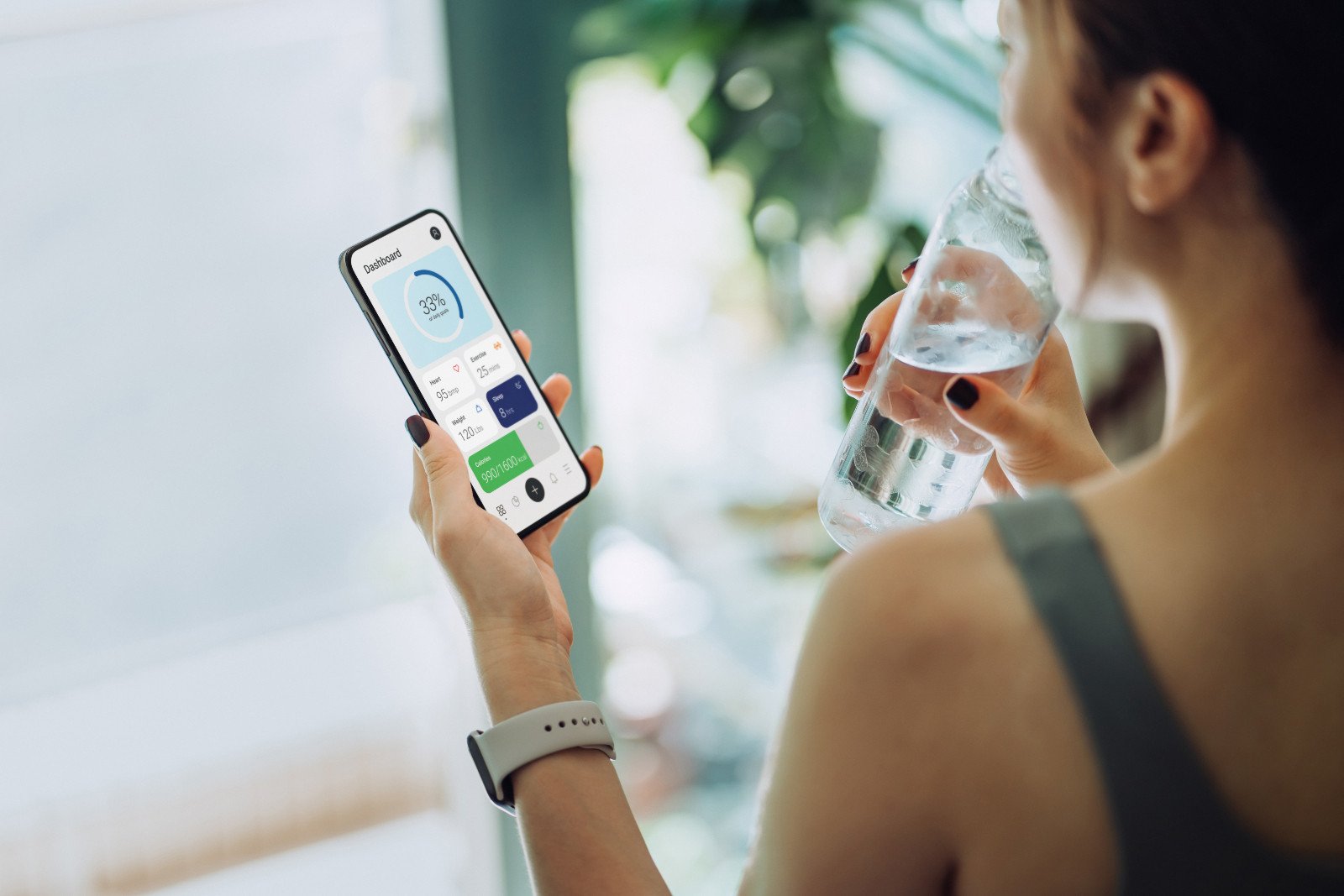
AboveModern self-care includes systems that generate data. The more data generated, the more monitoring and managing it starts to look like a job of its own (Photo:
One way to understand the shift is that the earlier consumer wellness market largely sold products and experiences. The newer phase builds on those offerings by selling systems that gather, interpret and respond to personal data.
As more data is generated, self-care can begin to resemble work: checking the information, deciding whether it matters, determining whether it is accurate, changing behaviour, monitoring the results and deciding whether to repeat or alter the process.
Medical researchers use the term “treatment burden” to describe the workload involved in managing illness and its effect on a person’s functioning and wellbeing. That work can include attending appointments, taking medication, monitoring symptoms and reorganising daily life around care.
Consumer wellness is not the same as managing chronic illness, but the concept raises a useful question: what happens when the workload of looking after our health begins to exceed the time, energy, money and support available?
Self-care became the individual answer to collective problems
Consumer self-care has also expanded amid persistent gaps in healthcare, workplace pressures and concerns about anxiety and trust in institutions. The wellness market offers action where institutions often offer ambiguity.
A clinician may explain that symptoms are complex or that no clear answer yet exists. Wellness marketing is more likely to identify a cause, protocol or product. The risk is that social and organisational problems become translated into failures of personal management.
Rina Raphael, journalist and author of the 2022 book The Gospel of Wellness, describes the central paradox: “We have become a self-care nation, though arguably one that still lacks the fundamentals of wellbeing.”
Productivity culture and self-care have merged
AboveAs the lines of productivity and self-care become blurred, activities like yoga are now expected to offer a tangible outcome (Photo:
Self-care did not become work only because the wellness industry grew. It also absorbed many of the assumptions of productivity culture, intensified by smartphones, always-on working, social media and the popularisation of life-hacking, habit tracking and the quantified self.
Everything began to require a return: sleep to perform better, meditation to focus, readiness rating or biological-age estimate.
And while measurements can provide useful information, problems can begin to arise when a metric stops being descriptive and becomes a judgement.
More than a decade before the current anti-optimisation backlash, organisation scholars Carl Cederström and André Spicer warned of what they called the “wellness syndrome”. In their 2015 book, The Wellness Syndrome, they argued that health and happiness were no longer merely desirable but were becoming moral obligations. Feeling good increasingly signified being good, while illness, unhappiness or an inability to keep improving risked being interpreted as failures of discipline or personal responsibility.
This moralisation is especially visible in language such as “clean” eating, “earning” rest, “falling off track” and becoming the “best” version of yourself. The implication is that a person is never finished because another, better version is always available.
Their argument helps explain why self-care can generate guilt. Missing a meditation session is no longer merely missing an activity: it can feel like failing to manage oneself correctly.
Has self-care made us more narcissistic or anxious?
AboveConstant self-monitoring may be crowding out community and quiet acceptance of life’s limits, blurring the line between caring for ourselves and being controlled by the routines meant to help us (Photo:
That raises several provocative questions. In our preoccupation with ourselves—our performance, bodies, scores and improvement—what happens to community, care for others and acceptance of ordinary human limits?
Does constant monitoring and intervention reduce trust in our ability to tolerate ordinary discomfort, uncertainty and bodily fluctuation?
Is wearing two wearable devices intelligent monitoring or compulsive checking? Is racing home from a social gathering to protect a prescribed sleep window a sensible boundary, or a sign that the routine has begun to control the life it was meant to support?
A 2026 scoping review led by Fei Liao et al and published in BMC Nursing examined 110 publications on wearable-device use in become much SelfCare work
