


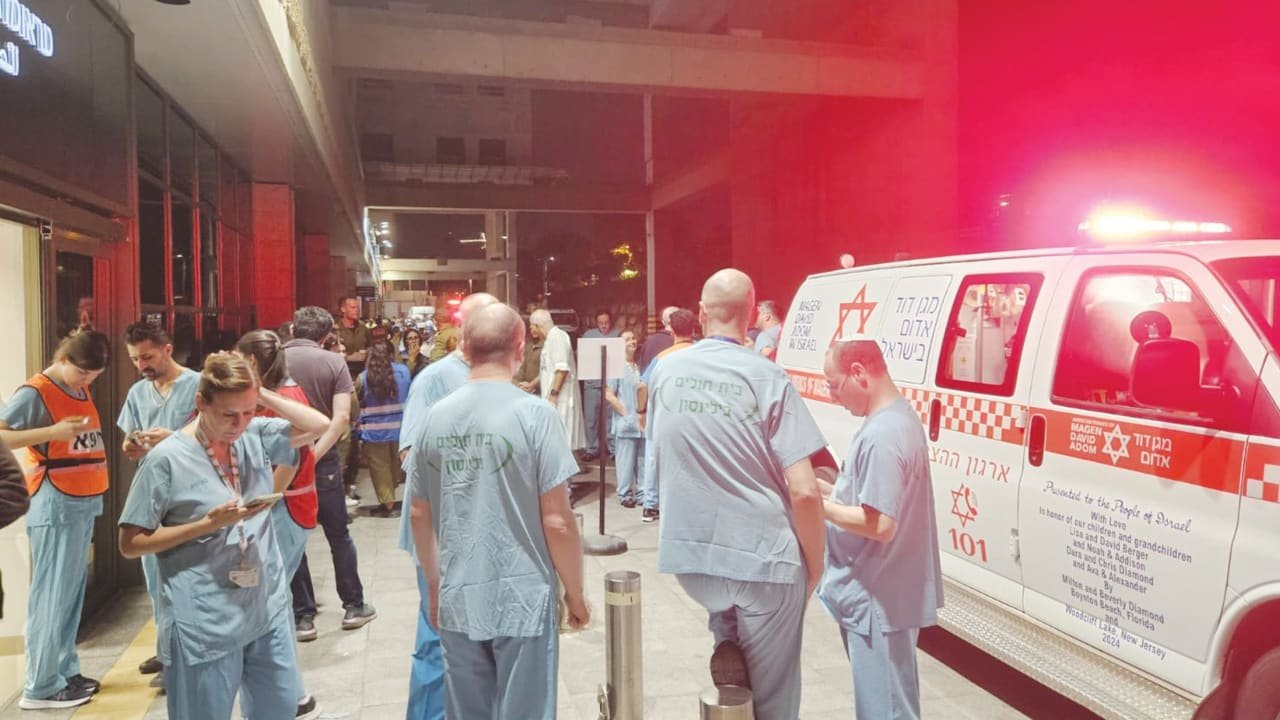
The outrageous massacre committed by Hamas terrorists on October 7, 2023, inflicted many hidden wounds – traumas almost as painful as being stabbed with a knife or shot with a gun.
Haim Ben-Arye was one of these undetected victims. A longtime school-bus driver who was deeply devoted to his young passengers, Haim was happily married to Irit for 30 years and a loving father of six adult children.
Not long before the attack, Haim’s daughter had shared joyous news: she was pregnant with his first grandchild. He had so much to look forward to.
Yet on October 25, just 18 days after the massacre, Haim drove to a remote location and ended his life.
“He loved his job and his passengers,” his wife, Irit, recalled. “On the morning of October 7, our son, a first responder, told us, ‘Something terrible has happened.’
“Haim went to shul to be with the children whose fathers had gone to fight. He played with them and sang songs. But after Shabbat, we sat in front of the TV, and he just wept.”
All four public health funds have estimated that there are 60,000 Israelis who developed clinical PTSD between October 2023 and December 2025; half were Clalit members.
Krivoy recalled that he ran a clinic in the southern city of Sderot, where during the Hamas attacks and the subsequent battles, 53 people – including 37 residents of and visitors to Sderot, 11 police officers, three IDF soldiers, and two firefighters – were murdered or killed.
“I learned that 90% of the population didn’t sleep at night. They were afraid there would be another attack. Even two years afterward, many didn’t go for diagnosis because they were afraid to leave their homes.
“There will be more like them in the coming years unless they get relief. There must be follow-up. We know from experience that Israelis are resilient, but we have to be able to detect crises early and treat them in time.
“Israeli society will recover, but we have to help them.”
Nufar Bar-Lipshatz, a developmental psychologist in a Clalit clinic in Beit She’an, told the Webinar audience that “we still live in a traumatic reality. My own husband has done a lot of reserve duty during summers and the High Holy Days, and the war isn’t over.”
She continued, saying that “delegations of Clalit therapists were sent to evacuated families who spent months in Eilat after the massacre.
“For some, it was the first time that they met a therapist. They were living in hotels, and they didn’t know when they could return. We encouraged them to talk; we encouraged their children to build toy houses so we could better understand their problems.
“In 20 years, these children will help run our society. Some of their family members were murdered, injured, and taken hostage. When the siren sounded, the difficulty continued. The child still struggles to feel safe. Some parents didn’t talk about it, but the kids can ‘read’ the stress in their parents’ faces and voices.”
Saying everything is fine doesn’t work, continued Bar-Lipshatz.
“They may develop fears that someone will kidnap them when they’re asleep or that their father could die in the army, but they won’t tell their parents, so they keep these fears to themselves.
“It can cause aggression and a hard time in preschool and school. Parents must give honest explanations, even though it’s hard.
“We can give the child a sense of meaning, recall their moments of bravery, that they went to the safe room fast; that they called the police or a relative even if they cried on the phone.”
Toddlers who are not yet verbal have difficulty expressing their experiences.
“We observe how they play and function every day,” the psychologist continued. “They may have nightmares, show aggression and withdrawal, play soldiers, hide, run to the shelter. Not every difficulty began in war. Some had problems before, but war can intensify it.”
A growing number of children who were emotionally affected by it all began to stutter.
“We didn’t have the personnel to treat each one individually, so we decided to organize a group of three- and four-year-olds with their parents,” recalled Bar-Lipshatz. “A siren sounded during the session, so we took them all to a shelter and did yoga, encouraging movement, play, and laughing.”
Prof. Ran Balicer, the founder and director of the research institute, Clalit’s chief innovation officer, and deputy director-general who also teaches at Ben-Gurion University in Beersheba, noted that mental health reform was added to the “basket” that insurers must pay for only in 2015.
Then COVID came and created a big burden. With the massacre, the health funds found that the mental-health care they were supposed to provide was underbudgeted, understaffed, and had long waiting times.
The 9/11 attacks on New York and Washington caused emotional harm in only 4% of Americans. In comparison, 15% of Israelis were directly affected. Not a single family wasn’t shocked by the barbarity.
When Iranian and other terrorist groups’ missiles fell, some Israelis took knives to the “safe” room. They felt nowhere was safe.
Clalit conducted a nationwide study with the Myers-JDC-Brookdale Institute that included 2,500 respondents. In January 2024, depression had affected 34%, and even today, it is clinically high.
Anxiety was 27%, and today it affects 20%. PTSD was 32% and has declined to 20%. One in five adults continue to report severe impairment in their daily functions, Balicer reported.
“We retrained primary care doctors so they could help treat patients. We added mental-health coaches, digital innovation, and used an AI tool to screen patients. Digital data helps us know who has a problem and predict future illness.
“Instead of waiting for patients to come in sick, doctors call and tell them they may have a medical problem. Not all doctors were willing to use them, but now they like the preventive-medicine technique because it can save lives.
“So many patients had been silent after October 7 that we created proactive preventive mental-health outreach and followed up treatment for 1,500 per week out of 8,000. We will continue to do this.”
