


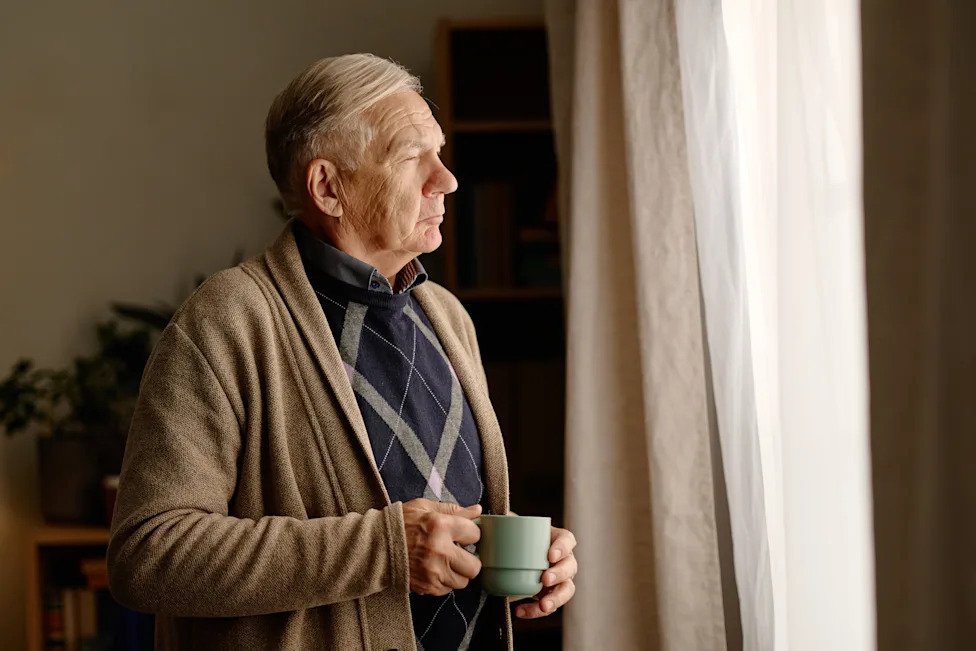
Most advice about living longer in good health comes down to the same short list: eat well, move often, sleep enough, and do not smoke. The implied promise is that these habits can make up for a lot, including the risks people cannot easily change.
A study published in Nature Communications tested that promise against two social factors that are often treated as the same thing, and found the habits worked for only one of them.
What the Research Found
Researchers at Tulane University analyzed data from the UK Biobank, a large health study of middle-aged adults in the United Kingdom. They included 277,489 people ages 40 to 69 who, at the start, had none of seven major conditions: diabetes, heart disease, lung disease, dementia, cancer, depression, or anxiety.
The team estimated how many years, from age 50, people could expect to live free of major physical disease and free of mental disorders. They then compared people who were both lonely and socially isolated with people who were neither.
Women who were both lonely and isolated lost about 2.4 years free of physical disease, and men about 1.7 years. The gap was larger for everyday language tends to blur. Social isolation is objective: how many contacts and activities someone actually has. Loneliness is subjective: how dissatisfied someone feels with the relationships they have. A person can live alone and feel connected, or sit at a full dinner table and feel lonely.
That distinction mattered for the central finding. A healthier lifestyle, meaning better diet, regular exercise, good sleep, and not smoking, measurably narrowed the healthy years lost in connection with social isolation. It did not significantly reduce the added risk linked to loneliness.
The study did not test why. One possible explanation, drawn from earlier research rather than this paper, is that loneliness acts as a form of chronic stress that keeps stress hormones and inflammation elevated, a pathway that good habits may not fully reach. Isolation, by contrast, may harm health partly through the habits that come with it, such as less activity and poorer sleep, which is exactly where a <a s mental health. The lead author, Dr. Lu Qi, suggested men may be more vulnerable to the effects of loneliness, while women's longer lifespans may shape their results differently. That is an interpretation, not something the study tested.
What This Does and Does Not Mean
This was an observational study, so it shows that loneliness and isolation were linked to fewer healthy years, not that they caused them. Loneliness could partly be an early sign of conditions such as depression rather than only a cause. UK Biobank participants also tend to be healthier and wealthier than the general population. The research team plans to study other groups and to run trials testing cause and effect.
The findings are not a reason to give up on healthy habits, which still helped with isolation and support health in many other ways. They suggest that loneliness may need to be addressed directly rather than assumed to improve alongside diet and exercise.
Loneliness is common and can be treated. Anyone who has felt persistently lonely, or notices it coming with low mood, can raise it with a doctor, who can point to counseling, community programs, or other support.
The Takeaway
In more than 277,000 adults, people who were both lonely and isolated lost years of healthy life, up to nearly 6 years free of mental disorders in men. Healthy habits offset part of the toll of isolation, but not the toll of loneliness, which makes feeling connected a health goal of its own.
Study reference: Wang X, Ma H, Heianza Y, Liang Z, Franco OH, Qi L. “Associations of Loneliness, Social Isolation and Healthy Lifestyle With Life Expectancy Free of Major Physical Disease and Mental Disorder.” Nature Communications, 2026. DOI:
<p>Creators are not employed by Yahoo. Views expressed by creators do not reflect the opinions and position of Yahoo.
