


18 Oct 2026By OUR CORRESPONDENT
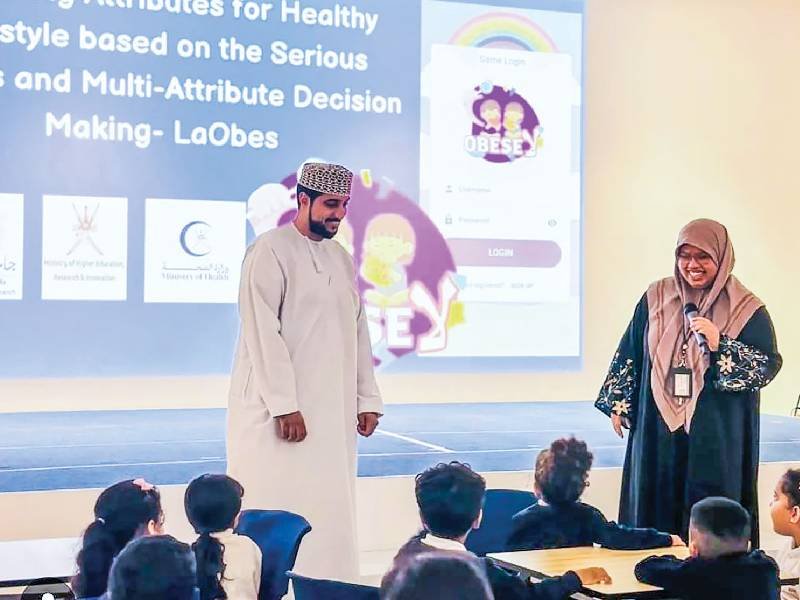
Muscat – A mobile game developed through research at Dhofar University is helping make nutrition, physical activity and the habits that contribute to a healthier life.
Funded through the Strategic Research Programme of the Research and Innovation Authority, in collaboration with the Ministry of Health, the project is led by Dr Nurul Akhmal Mohd Zulkefli, Assistant Professor in the Department of Computer Science at Dhofar University’s College of Arts and Applied Sciences.
Titled Targeting Attributes for a Healthy Lifestyle Using Multi-Criteria Decision-Making (MCDM) and a Serious Games Mobile Application – LaObese, the research combines scientific decision-making with digital technology to support childhood health education.
Unlike conventional educational approaches that rely primarily on providing information, LaObese encourages children to make choices, explore different situations and learn from feedback as they play. The application incorporates activities related to food selection, physical activity and healthy lifestyle decisions.
A key feature is its focus on Omani and locally familiar foods. Children encounter food examples relevant to their daily lives at home, school and in their communities, helping connect health messages with their own experiences.
Rather than simply classifying traditional foods as healthy or unhealthy, the application aims to improve children’s understanding of balanced portions, nutritional value, healthier ingredients and appropriate consumption frequency. It also highlights the importance of combining sensible eating habits with regular physical activity.
The project uses multi-criteria decision-making (MCDM) to identify, evaluate and prioritise the factors incorporated into the application. This approach allows researchers to consider several attributes when assessing healthy lifestyle choices rather than relying on a single measure.
The research also examined children’s learning through pre-test and post-test evaluations covering three areas: food selection, physical activity and understanding of healthy lifestyles. These assessments provided information about children’s knowledge and decision-making within the scope of the study.
Dr Nurul recommends that digital health education for children reflect local food cultures and include familiar choices. She also sees potential for serious games to complement teaching in schools, health awareness campaigns, nutrition initiatives and family-based education.
Further research involving larger and more diverse groups of children across Oman could help establish the wider benefits of such applications. Long-term studies could also examine whether
H M Sultan Haitham arrives in UK for state visit

Two in three Omanis surveyed use AI regularly: NCSI