


The town that launched a global self-care industry

Alamy
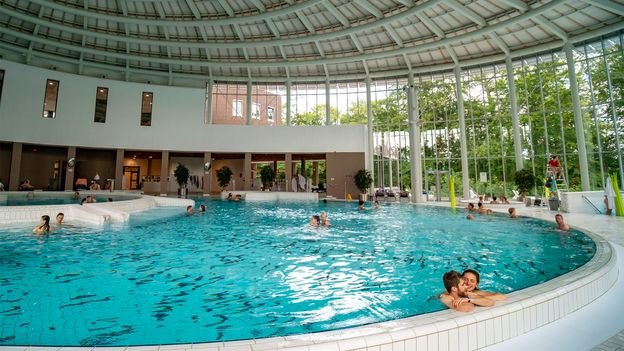
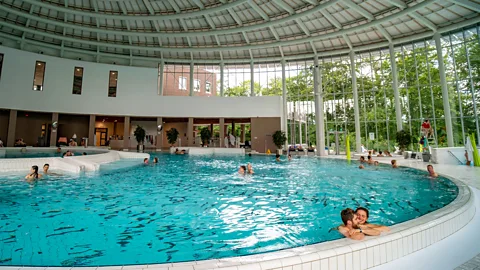
Long before <a m floating on a jet stream of warm thermal water, overlooking bare winter branches silhouetted against the setting Sun. The current draws me gently around the edge of an outdoor pool, nudging me toward its furious, bubbling centre before it propels me indoors, where more pools, jacuzzis, hammams and a dizzying array of treatment rooms unfold in sequence.
I am at
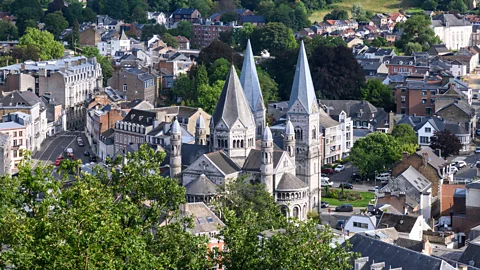
<p>Spa calls itself ” the original spa and its mineral springs were already known in roman times. they first recorded by pliny elder whose writings helped establish reputation as a place of healing waters. popular belief tells that romans gave name derived from latin phrase>sanitas per aquam (“health through water”) but historians agree the name is a later invention.
“Spau, spaha or spaw were old Germanic words used to describe water that bubbles or gushes from the ground,” explains local guide Philippe Calonne. “And this is a much more likely origin of the name, which Roman travellers adopted.” He explained that they spread it across the empire, lending its name to other places with thermal waters, before it gradually became shorthand for general health and beauty facilities.
Alamy
The springs that shaped Spa are still visible today. In the town centre, the Pouhon Pierre-le-Grand pavilion – named after Peter the Great, who visited in 1717 – houses one of theked to its very first spring,” Calonne tells me. “At the beginning, the site was nothing more than a hole in the ground, but that changed during the Middle Ages, as word spread of Spa’s acidic, iron-rich water and its reputed <a
These early visitors did not come to bathe, however. Spa was initially known for “drinking therapy”, and public drinking fountains still dot the town, their basins stained a deep, rusty red – visible evidence of the iron content – with some corroded through entirely. The water tastes metallic, sharp and slightly bitter. It’s not pleasant, and historically that was the point: the stronger the flavour, the more convincing the cure was believed to be. Peter the Great reportedly stayed for around a month, drank more than 20 cups a day and was said to have been cured of digestive and liver ailments.
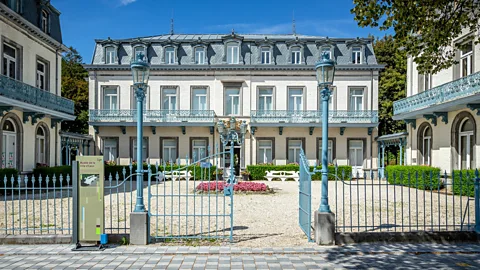
The shift from drinking to bathing began in the mid-16th Century. In 1559, a physician from nearby Liège, Gilbert Lymborh, published a treatise on Spa’s mineral waters. With it, Spa’s reputation grew and wealthy patients began arriving not only to drink the waters but to immerse themselves in them. By the 18th Century, Spa had reinvented itself as one of Europe’s most fashionable resorts. Its grand municipal baths were built in 1868, and under Belgium’s King Leopold II, who reigned from 1865, the town was deliberately reimagined as the “pearl of the Ardennes”.
“Over time, Spa became increasingly well-known and attracted important figures from across the continent,” says Calonne. “Aristocrats, artists, intellectuals and political figures arrived to socialise as much as to seek cures.”
SPA! Museum
